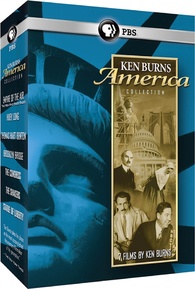
One of America’s preeminent historians, Ken Burns became a household name when his nine-part documentary “The Civil War” first aired on PBS in 1990. A hit with critics and audiences alike, “The Civil War” received many honors including two Emmys for Outstanding Informational Series, and Outstanding Individual Achievement – Informational Programming. Ken Burns had been making documentaries exploring American history for nearly a decade before that. Smaller in scope, his six films made before “The Civil War” and one released in 1991, make up his “Ken Burns America” series. First available in 2004, the seven-disc set was recently re-released on DVD.
Brooklyn Bridge
Burns made his directorial debut in 1981 with the Oscar nominated “Brooklyn Bridge,” about the building of the famous New York landmark. Designed by John A. Roebling and built by his son Washington Roebling, the bridge opened on May 24, 1883, too much fanfare. At the time, it was the longest suspension bridge in the world. “The Brooklyn Bridge” is narrated by Burns regular David McCullough, who wrote the 1972 book on which the film is based, “The Great Bridge: The Epic Story of the Building of the Brooklyn Bridge.”
In 2025, “Brooklyn Bridge” was selected for preservation in the United States National Film Registry by the Library of Congress as being “culturally, historically or aesthetically significant.”
The Shakers: Hands to Work, Hearts to God
Released in 1984, “The Shakers: Hands to Work, Hearts to God” explores the Shakers, a religious sect founded in England in 1747 by an illiterate factory worker, Ann Lee. An offshoot of the quakers, they settled in America in the 1780’s. Known for their enthusiastic shaking, they adopted a simple life of celibacy and devotion to God.
With David McCullough as narrator, Burns uses historical photographs, letters, and interviews with three surviving Shaker women to tell the story. Many of the Shaker communities eventually dissolved due to their vow of celibacy. It’s interesting to note that founder Ann Lee had four children, all of whom died in infancy or early childhood.
The Statue of Liberty
1985 saw Ken Burns return to a New York City landmark with “The Statue of Liberty.” Once again narrated by David McCullough, dedicated in 1886, The Statue of Liberty was a gift from France to celebrate the United States centennial. The statue was built in France and assembled in New York Harbor. The film includes remarks from McCullough, then New York Governor Mario Cuomo, writer James Baldwin, musician Ray Charles, and others. “The Statue of Liberty” received an Oscar nomination for Best Documentary Feature.
Huey Long
Nicknamed “The Kingfish,” Louisiana’s Huey Long was loved by the common man and loathed by others with money and power. Governor from 1928 to 1932, and United States Senator from 1932 until his 1935 assassination. Long used bullying tactics and unscrupulous political methods but brought about real change to his depression stricken state. Had he not been killed, many believed he would have been a real threat to President Franklin Delano Roosevelt who Long openly criticized for not being radical enough.
Along with narrator David McCullough, 1985’s “Huey Long” features interviews with Huey Long’s son and fellow United States Senator, Russell Long, and author Robert Penn Warren whose 1946 Pulitzer Prize winning novel, “All the Kings Men” was inspired by the life of Huey Long.
Thomas Hart Benton
1988 saw the release of “Thomas Hart Benton,” an examination of the painter whose personality was as big as some of his murals. Born in 1889, his regionalist art depicted the people and places in the Midwestern United States. A mentor to Jackson Pollock, “Thomas Hart Benton,” is narrated by actor Jason Robards and includes archive interviews with the artist himself, as well as family members, and fellow artists.
The Congress
Ken Burns closed out the eighties with the 1989 release of “The Congress.” One of America’s most important institutions, it is also the most misunderstood. In the words of narrator David McCullough, “The promise of Congress is that at the heart of the government will be people who are very much like ourselves, who are part of our local community, not separated from it and bring to the center of government, the sensibilities, the sensitivities and we hope, the common sense that you find in American communities across the land.”
At ninety minutes, this documentary skims the surface of 200 years of history. Focusing on well known names such as Henry Clay (who was the first man to lie in state in the rotunda of the Capitol), Daniel Webster, and Sam Rayburn among others. There are interviews with newspaperman Charles McDowell, historian Barbara Fields, former Senator John Stennis, and journalist Cokie Roberts, etc.
Empire of the Air: The Men Who Made Radio
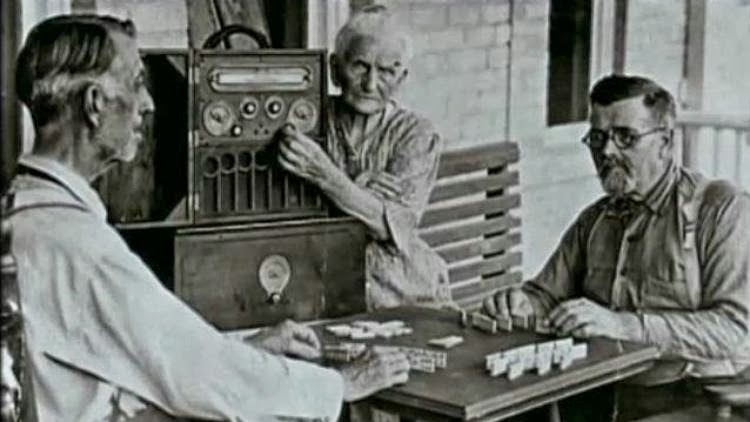
The last documentary in the series released in 1992, “Empire of the Air: The Men Who Made Radio” is based on Tom Lewis’ 1991 book of the same name. narrated by actor Jason Robards, the film focuses on three American pioneers in the field: Lee de Forest, inventor of the “Audion” triode vacuum tube, Edwin Howard Armstrong, inventor of FM technology and David Sarnoff, leader of Radio Corporation of America (RCA). Sportscaster Red Barber is among the interview subjects.
The following extras are included on all the discs except “Empire of the Air: The Men Who Made Radio:”
- Ken Burns: Making History (7 min.)
- A Conversation with Ken Burns (12 min.)