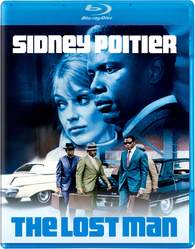
By 1969, Sidney Poitier was a bonafide superstar with a series of successful movies to his credit. That year saw him move away from his good guy persona with The Lost Man, an earnest attempt to examine the racial tumult of the sixties. Loosely based on the same novel as the artistically superior Odd Man Out (1947), and written and directed by Robert Alan Aurthur, The Lost Man received mostly negative reviews and was a box office disappointment.
Poitier plays ex-con Jason Higgs, a leader of an unnamed black militant organization. Jason has planned a payroll robbery with the proceedings used to buy food for the children of incarcerated activists. While others disagree with his plan, Jason eventually convinces them that the organization has a duty to look after the families of the men who have sacrificed for the cause.
When we first see Jason, he’s sitting in the back of a car wearing a crisp suit, and black sunglasses watching a protest organized by councilman Dennis Lawrence (Al Freeman, Jr.). Jason is emotionless as the protest evolves into chaos, when the police begin beating everyone. He is obviously deep in thought.
Jason has planned the robbery down to the smallest detail, but things go haywire when he gets shot and kills the shooter. As the group scatters, Jason must use his street smarts to go on the run with the police following his every move.
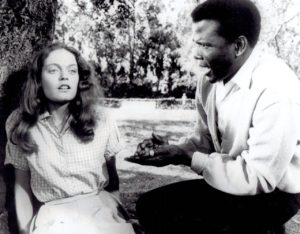
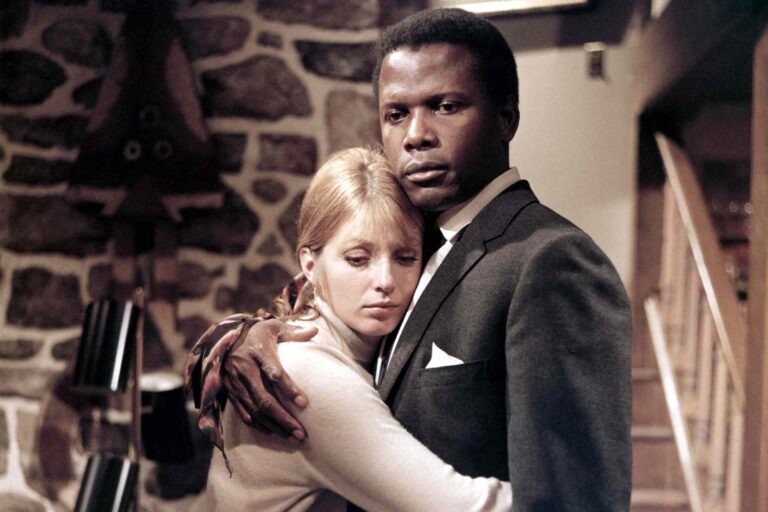
Social worker Cathy Ellis (Joanna Shimkus), a young white woman sympathetic to their cause, vows to help Jason and his men in any way she can. Predictably, it’s not long before she develops romantic feelings for Jason. It’s obvious from the start that this would-be couple is doomed.
Though Potier does his best to make Jason intimidating, he’s just not right for the role. Having had a legendary career playing affable characters with a clear sense of morality, his stoic gangster personality just doesn’t gel. There are moments when he’s believable, others not so much. There is chemistry with Joanna Shimkus; the two would later marry. Even so, Shimkus’s Cathy is obviously being used. Her race, and family wealth gives her access to people and places where a black man wouldn’t be welcome, so Jason needs her to survive.
Not a terrible movie per se, The Lost Man is a lesser entry in Poitier’s filmography, of interest only to fans of the actor. As for the rest of the cast, the always underrated Al Freeman, Jr, makes the most of his role as a nonviolent activist, and Vonetta McKee and a young Paul Winfield show up in small roles.
The Lost Man has never been available on DVD, so Kino Lorber’s Blu-ray release is a welcome arrival. Presented in the 2.35:1 aspect ratio, the release is a new 4K restoration. The results are excellent, offering stunning clarity throughout. colors are stunning, with vivid primaries and inky blacks. Aside from a few scratches during the opening credits, the image is sharp, and free of debris. Details are stunning, whether it be the period clothing, or the pores on Sidney Poitier’s face.
The English DTS-HD Master Audio 2.0 track offers a clear, nuanced listening experience. The heist scene is as enveloping as this mix can provide, given its obvious limitations. Quincy Jones’ snappy score adds nicely to the overall feel of the film. Dialogue is clean, clear, and concise throughout. There are no scratches, pops, or other serious anomalies.
English SDH subtitles are included.
The following extras are available:
- NEW Audio Commentary by Film Historian/Writer Julie Kirgo and Writer/Filmmaker Peter Hankoff
- Theatrical Trailer